Okinawa-kenpo is a karate style which has been developed based on ancient Okinawan martial arts called "Ti". Its technique and thought were studied and refined by a Tomari-te master, Shinkichi Kuniyoshi (also known as "BUSHI" Kuniyoshi) and passed down to Grand Master Shigeru Nakamura, the founder of Okinawa-kenpo. Grand Master Nakamura opened his own dojo "Okinawa-kenpo Karate-do Shurenjo" at Onaka, Nago city and taught his art of karate.
Written in Japanese.
Japanese fonts required to view this contents
"Okinawa-kenpo" was founded by Grand Master Shigeru Nakamura in 1960 as an association of diverse dojos based on his belief "there is no Ryuha in Okinawa karate".
Participation to a competition in Kyushu as "The All Japan karate-do Federation, Okinawa District" was how it all started. Nakamura felt how strong Japanese karate organization was at the competition and worried about the future of Okinawa karate.
Then, he appealed to all karate-ka in Okinawa for participating to the movement of "Okinawa-kenpo".
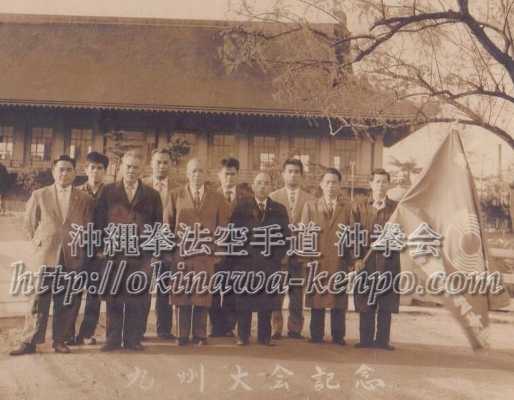
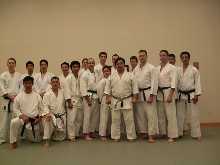
Upper row (left to right): 2nd from left, Komei Tsuha,Hiroshi Miyazato, Toshimitsu Kina
Bottom row (left to right): 2nd from left, Shigeru Nakamura, Shinsuke Kaneshima, Zenryo Shimabukuro
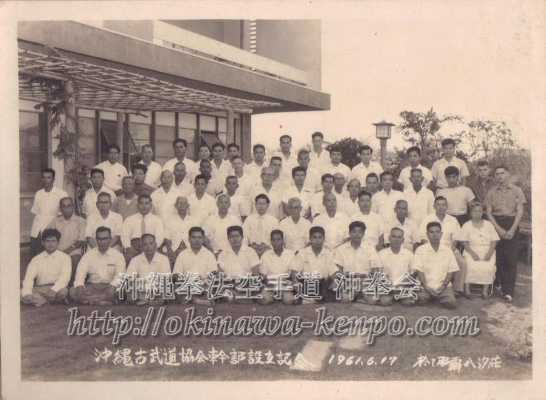
Upper row (left to right): (3rd from left) Kamaichi Nohara, Shinei Kaneshima, Tatsuo Shimabuku, (10th from left) Masami Chinen, Zenryo Shimabukuro
Middle row (left to right): (3rd from left) Shinei Kyan, Shosei Kina, Shinsuke Kaneshima, Seitoku Higa, (8th from left) Seiyu Nakasone, Kenko Nakaima
Bottom row (left to right): Hiroshi Miyazato, Komei Tsuha, (9th from left) Shigeru Nakamura, Joen Nakazato
In June 17, 1961, karate masters from all over Okinawa gathered at Yashio-so, Naha city. At this meeting, they had a discussion about the unification of Okinawa karate and finally came to endorse it (Establishing of Okinawa Kobudo Kyokai).
After Nakamura's passing, the group fell apart. However, Okinawa karate advanced to an era of great development.
Each karate style goes on its own way, and Okinawa-kenpo has become the name of the style which was taught and practiced by the students of Grand Master Nakamura.
Various Ryuha participated in the movement of "Okinawa-kenpo".
Mostly, they were from "The All Japan karate-do Federation, Okinawa District" and "Okinawa Kobudo Kyokai". Exchange of techniques was widely performed among them.
After the death of Nakamura, Okinawa-kenpo was divided into several groups.
Each group inherited Nakamura's will and techniques and developed Okinawa-kenpo in their own way.
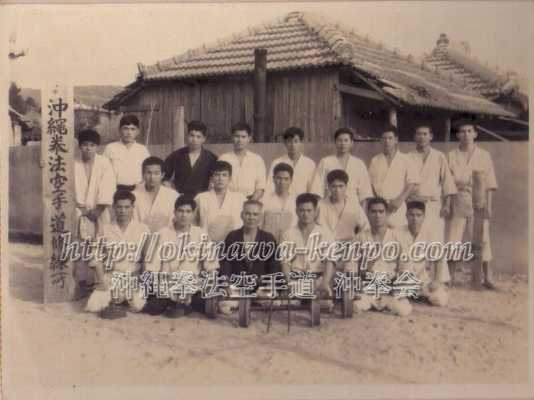
Bottom row, 3rd from left, Grand master Shigeru Nakamura, Shihan-dai Hiroshi Miyazatoo, Toshimitsu Kina
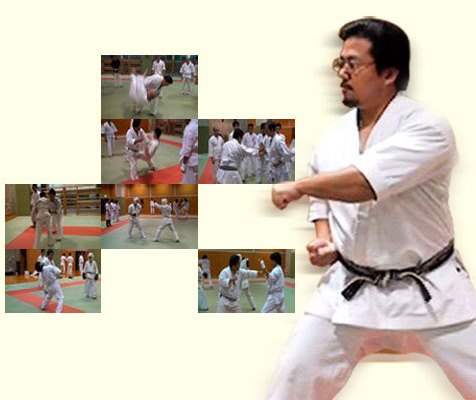
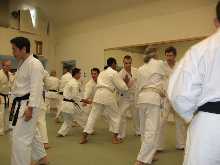
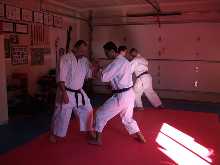
Old style karate techniques and training methods still remain in our system. We train with those methods, which are rarely seen in other Ryuha these days.
Tanren-hou (Training method)
Okinawa-sumo (traditional Okinawan wrestling)
Torite (grabbing)
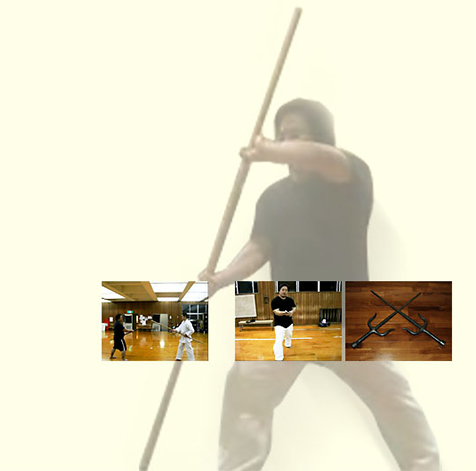
Buki-jutsu (weapons)
Our techniques, from empty hands to weapons,are incorporated in a coherent system and consist of common basic skills.
Historically, Okinawa-kenpo inherited various Kata.
The following is a list of kata which are practiced at Okinawa-kenpo Karate-do, Oki-ken-kai
Karate
Weapons
Understanding the system reduces the need for rote learning.
Reduces Cognitive Load: Instead of hundreds of rules, students learn a few core systems that generate thousands of sentences.
Moves beyond simple/compound/complex labels. Focuses on:
The Voice SystemThe choice between Active and Passive voice is a system of "thematization." It allows the speaker to decide which participant in an action is the most important or "the theme" of the sentence. Active: Focuses on the "doer" (The chef prepared the meal). Understanding the system reduces the need for rote learning
The foundational layer of English grammar is morphology—the study of how words are formed from smaller meaningful units called morphemes. Free vs. Bound Morphemes
Instead of treating grammar as a collection of random mistakes to correct, viewing it as a system helps teachers explain why certain structures are used in specific contexts. For example, deciding between the present simple and present continuous is not just about time, but about how the speaker views the permanence of an action. 2. The Tense and Aspect System
This public link is valid for 7 days and shares a thread, including any personal information you added. This link or copies made by others cannot be deleted. If you share with third parties, their policies apply. Can’t copy the link right now. Try again later. Focuses on: The Voice SystemThe choice between Active
If you're looking to add this to your professional library, you can find the at retailers like Amazon India (typically around ₹2390). For those who prefer digital browsing, snippets and previews are often available on Scribd and ResearchGate . Final Verdict
A quick but thorough review of English syntax, focusing on the rank scale :
Since you are looking for a helpful overview of the book by Peter Master, you have likely encountered it in a TESOL, ESL, or Applied Linguistics course. It is a staple text because it bridges the gap between knowing how to use English and knowing how to explain it. Free vs
How morphemes and words combine into structures (syntax and morphology).
Beyond Master's work, a systems approach to language pedagogy has emerged as a complementary framework. In his 2019 edited volume A Systems Approach to Language Pedagogy , Akira Tajino argues that in the literature of language education, each topic or issue has often been dealt with independently and treated as an isolated item. Taking grammar instruction as an example, grammatical items are often taught in a sequential, step-by-step manner, but there has been no "road map" in which the interrelations between the various items are demonstrated. Tajino suggests that this may be one factor that makes it more difficult for students to learn the language organically.
This public link is valid for 7 days and shares a thread, including any personal information you added. This link or copies made by others cannot be deleted. If you share with third parties, their policies apply. Can’t copy the link right now. Try again later.
Instructors considering the book for a course may request examination copies directly from the publisher or via academic booksellers.
By framing grammar as a map of choices, you empower learners to understand why a structure is used, rather than just how it is formed. 2. The Core Systems of English Grammar
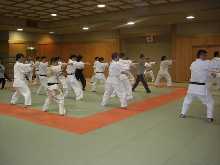
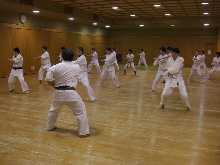
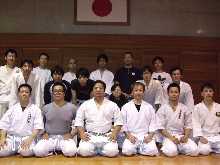
We, Okinawa-kenpo Karate-do Oki-Ken-Kai, work on in a unit called "Keiko-kai".
is a group of like-minded people to practice Okinawa-kenpo any time and anywhere.
Today, there are Keiko-kai in eight region Japan;
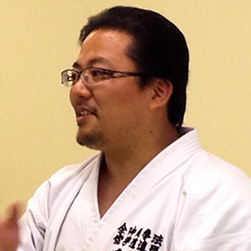
Shihan Yamashiro visits each Keiko-kai regularly, trains them, and conducts open seminars.


Shihan Yamashiro has been invited by masters of other styles, and conducted seminars regularly.


He started practicing karate when he was little with his father, Tatsuo Yamashiro, who inherited "Ti" from Hiroshi Miyazato.
He won 1st place at "All Okinawa Full Contact Fighting with Bogu Gear Tournament" in 1992 and 1993,
Written in Japanese.
Japanese fonts required to view this contents