We use cookies to ensure you get the best user experience on our website.Find Out More
Mobile apps, web apps, any platform. One shake, click, or tap gets you video reproductions, network logs, and everything developers need to fix issues fast.
Installation
Bugs
Crashes
Sessions
We are proud to be accepted into NVIDIA Inception, a program designed to support innovative startups building the next generation of AI-powered products. This strengthens our path as we continue expanding Crash AI, analytics intelligence, and smarter debugging workflows for engineering teams.

































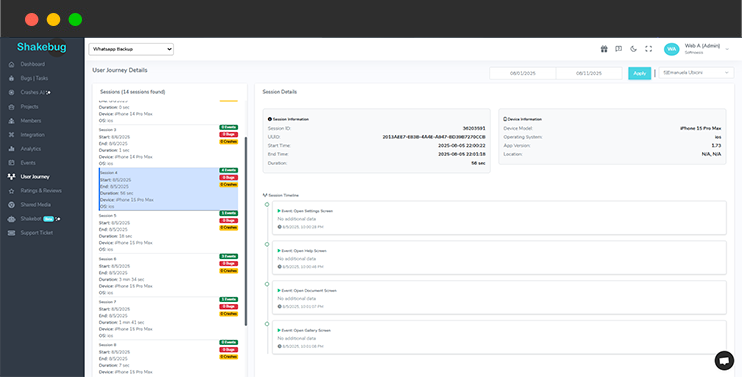
With Shakebug, you see bugs and the complete narrative. Get a clear timeline with our user journey, connecting sessions, events, bug reports, and crash data. See navigation, actions, and exact issue points. Fix issues faster and prioritize work with accurate, actionable insights in the same reporting and monitoring tool.
Wave goodbye to the hassle of sorting through countless identical crash reports. With Crash AI, our platform smartly organizes recurring crashes, presenting just one entry that includes all the essential details like the first occurrence, affected devices, OS versions, and much more.

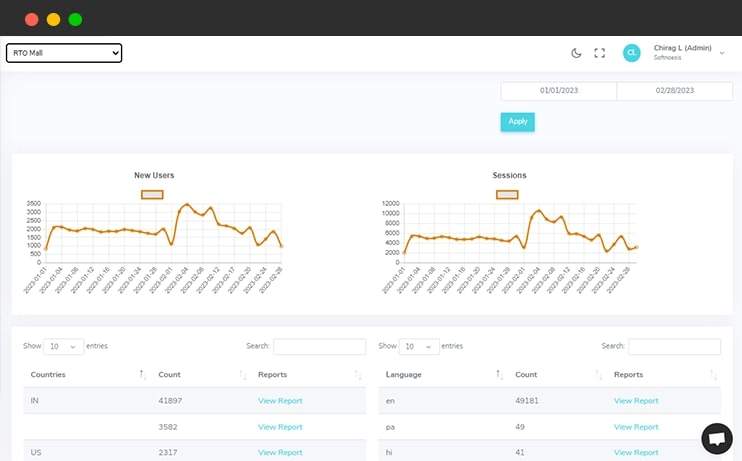
Along with bugs and crash reporting, Shakebug analyzes the application usage in different ways like session, language, countries etc. It also allows users to check analytics in the form of graphical representation over the selection period of time.
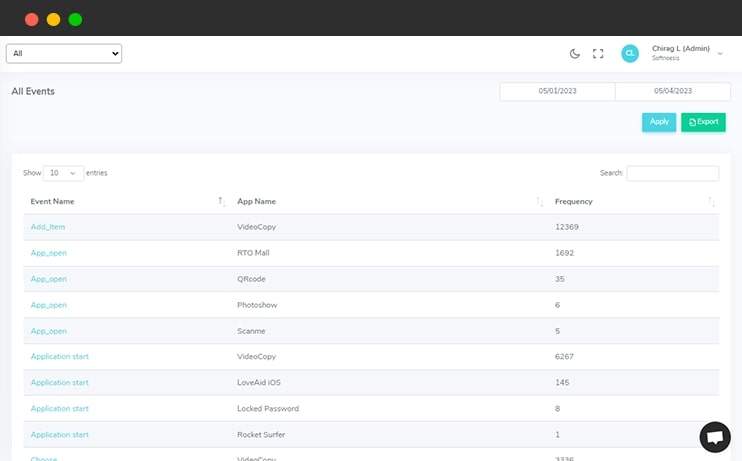
Developers/Users can add custom events and values for each action of the application easily where they want. In addition to this, users can also check the session of each event and value in graphical form as well.
Over 0 events tracked in action.
Shakebug helps users to highlight bugs by capturing the screenshot of the screen within a few clicks. This tool minimizes the bug reporting time for your tester and clients.
Shakebug will automatically report the crashes of applications whenever it occurs. Here users don't need to spend time for crash reporting.
: Highly optimized inline hooking engines used to intercept native function calls and redirect execution flows.
Developers clone the LGL template from GitHub and open it using an Integrated Development Environment (IDE) like Android Studio.
Conclusion Mod menus such as "LGL Mod Menu 32 New" encapsulate both the creativity and risks of game modification. They can empower personalization, accessibility, and learning, but also threaten security, fairness, and user accounts—especially in multiplayer contexts. Responsible use requires careful source vetting, adherence to game terms, protecting personal systems, and weighing the ethical impact on other players.
In the early days of mobile game modding, creating a "floating menu" that stayed on top of a game required deep knowledge of Java, C++, and JNI (Java Native Interface). Most modders were limited to static patches until the released their template on GitHub. It provided a pre-built structure that handled the "overlay" permissions and the native code (C++) needed to hook into game engines like Unity. The Evolution: Version 3.2 and Beyond
Compile the project in Android Studio to generate the .apk or the .so library.
Once the game launches, you will see a floating icon (usually a logo or a square button).
: Full native compilation support across ARMv7 , ARM64 , x86 , and x86_64 binaries.
: It allows players to toggle various "hacks" on and off through a floating icon on their screen while playing. ⚠️ Important Risks Account Bans : Using mod menus in competitive games like One Piece Bounty Rush
The represents the latest generation of open-source floating mod menu templates designed for reverse engineering and enhancing Android native games. Maintained heavily within the GitHub home of the LGLTeam GitHub Repository , this system gives developers a powerful, native UI overlay to toggle game features in real-time.
The refers to the latest iteration of a popular modding interface originally associated with legacy gaming libraries (LGL). Designed primarily for 32-bit applications and games, this mod menu allows users to inject custom scripts, toggles, and cheats into supported mobile games.
Explain with the Dobby library. Help you find tutorials for specific games .
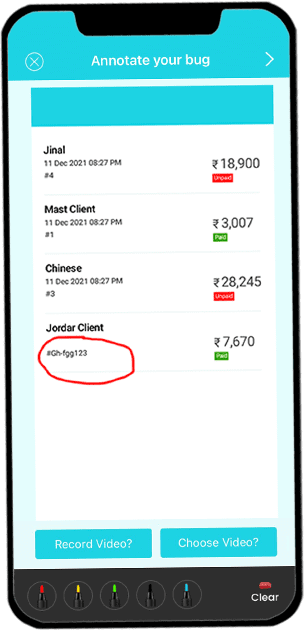
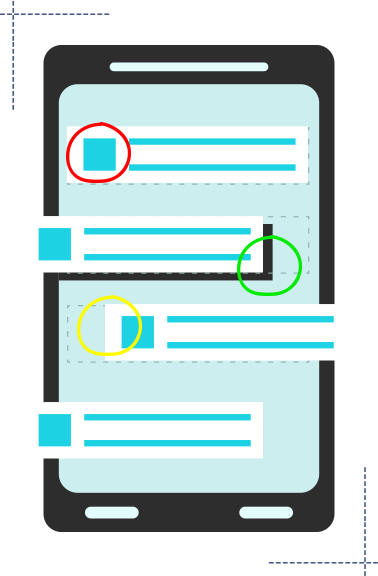
Open your application on your mobile phone and shake it. After that screen will appear where you can highlight the area of the bug.
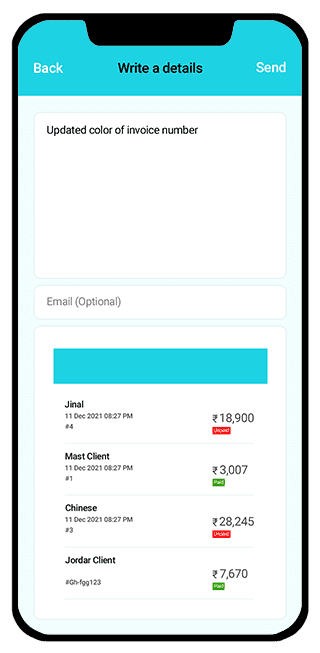
After highlighting the area, a screen will appear where the user can write a bug description which explains the details about bugs or issues.
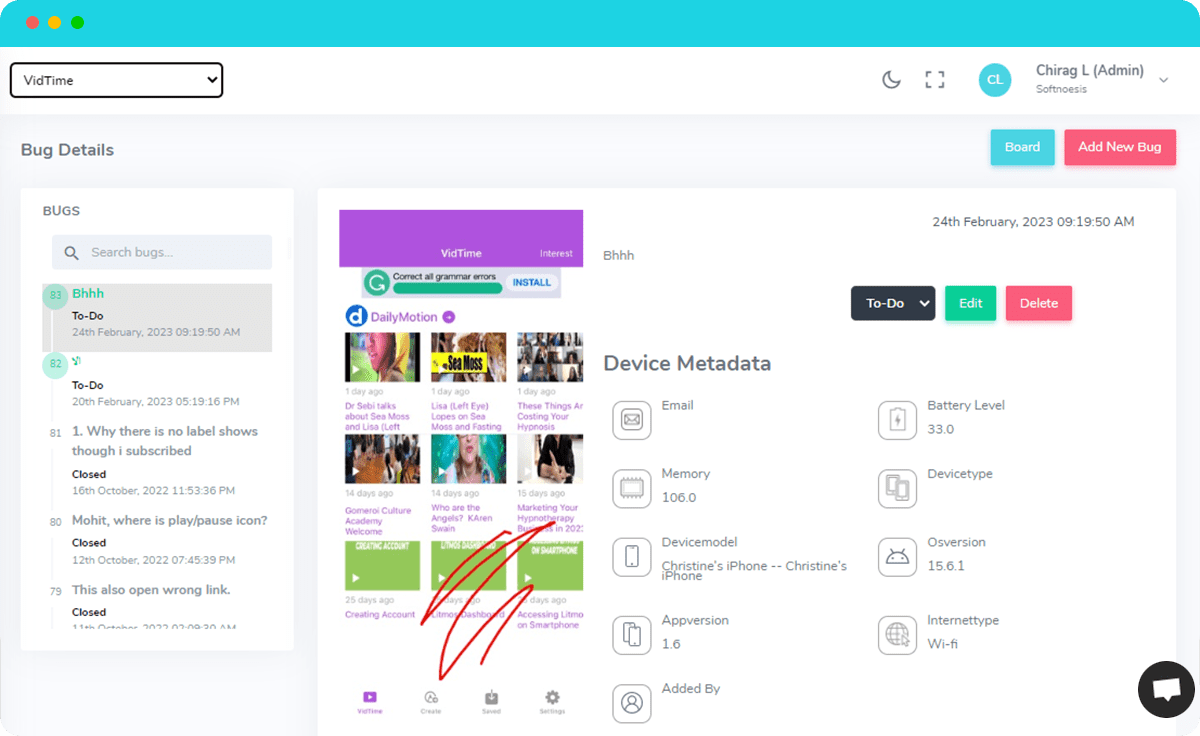
Once you report the bug, you will get the following screen with bug’s details along with device and OS information to your assigned developers. They can update its status when it is resolved.